
Many restaurant owners believe that a larger space guarantees higher revenue. The logic feels simple. More seats should mean more sales. However, before you make such a move, please talk with a restaurant consultant to avoid costly mistakes. Relocating a restaurant to a bigger location changes far more than capacity. It reshapes operations, staffing, branding, and customer perception. Expansion can look exciting on paper. Landlords promote visibility and square footage. Brokers highlight growth potential. Yet size alone does not create demand. In fact, demand must already exist before expansion makes sense. Without proven traffic, relocating restaurants into a larger space increases pressure instead of profit. The smarter move focuses on efficiency, not ego.
The Real Cost of Relocating Restaurants: Hidden Expenses Beyond Rent
Rent is only the starting point. Larger spaces bring higher utility bills and insurance premiums. Heating and cooling expenses often double. Maintenance costs rise with square footage. Even simple repairs cost more in expanded spaces.
Build-out expenses also increase. Flooring, plumbing, lighting, kitchen upgrades, and décor and branding elements require more materials and labor. Not to mention, compliance upgrades can stretch budgets beyond projections. Fire systems, accessibility adjustments, and grease traps add unexpected costs. Many owners underestimate these items when planning a relocation. Moreover, be sure that you’ve developed a comprehensive brand plan.
Labor costs expand as well. More seats require more servers and support staff. Management layers may increase. Cleaning crews spend more hours maintaining the dining room. Payroll grows faster than revenue in many cases. Meanwhile, marketing expenses rise because the brand must reintroduce itself to a new area. These combined factors push the break-even point higher than expected.
Empty Seats Damage Perception and Profitability
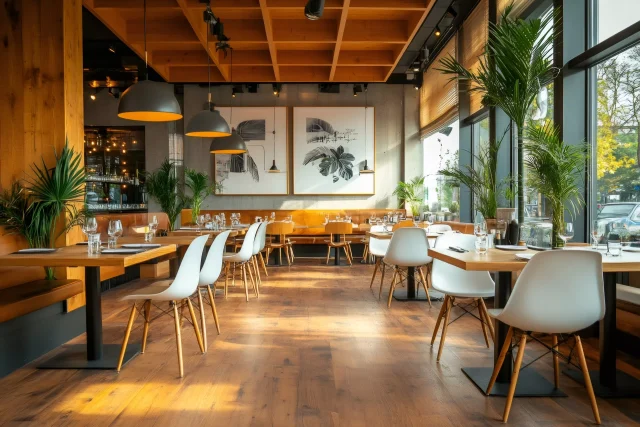
When you move to a new place, you need to build community trust. A full dining room creates energy. Guests feel confident when others are dining. In contrast, empty tables send the wrong message. People question the quality or popularity of food when a space feels vacant.
Revenue per square foot matters more than total capacity. Smaller restaurants often generate stronger margins because they maximize each table. Larger rooms require a steady flow of people to feel lively. Similarly, perception shapes online reviews and repeat visits. Customers remember atmosphere as much as food.
Half-filled rooms also reduce urgency. Guests linger longer when tables are available. Turnover slows. Service feels stretched because staff cover larger areas. At the same time, a compact space supports faster pacing and stronger coordination. The visual impact of empty seating can quietly erode brand strength.
Operational Complexity Multiplies With Space
Service routes expand in larger dining rooms. Servers walk longer distances. Food cools during transport. Communication between the kitchen and the front of house weakens. Small inefficiencies compound over a shift.
Inventory control also becomes harder. Larger kitchens store more ingredients. Waste increases when demand fluctuates. Oversight spreads thin across stations. Besides, training consistency declines as teams grow. Managers spend more time supervising instead of refining service.
Delivery and pickup areas require new planning. Traffic flow may conflict with dine-in guests. Kitchen timing grows harder to control. Consequently, customer experience suffers without obvious warning signs. Efficiency depends on layout, not size. A well-designed, smaller space often outperforms a poorly structured large one.
To manage expansion effectively, systems must evolve before the move. Standard operating procedures should turn it into an organized process rather than a daily improvisation. Clear task mapping reduces confusion during transition periods. Teams can use moving hacks to save time and reduce stress, such as phased inventory transfers and pre-labeled storage zones. Structured preparation reduces service disruptions and preserves consistency after reopening.
Bigger Spaces Require Stronger Brand Positioning
Moving into a larger space often changes the restaurant’s identity. A cozy neighborhood spot may lose charm in a wide dining hall. Guests who valued intimacy may feel disconnected after relocation.
Location shifts also affect demographics—foot traffic patterns change. Parking availability influences visits. Of course, community ties may weaken when a restaurant moves away from its original base. Loyalty depends on familiarity and convenience.
A larger space demands a broader appeal. Marketing must attract new customer groups. Brand messaging may shift to support higher volume. Nevertheless, expansion without clear demand research risks dilution. Growth should strengthen identity, not blur it.

Cash Flow Pressure and Break-Even Reality
Fixed expenses rise sharply after relocation. Rent, utilities, and payroll continue regardless of daily sales. The break-even point climbs higher each month. Seasonal dips become more dangerous. It’s important to incorporate a digital marketing budget into your monthly overhead; marketing is a sales driver, not an expense.
Debt often finances expansion. Loan payments add pressure during slow periods. Investors may expect faster growth. However, sales rarely increase at the same pace as costs. In contrast, a smaller operation can adjust faster during downturns.
Cash reserves drain quickly in oversized spaces. Slower weekdays create gaps that weekend rushes cannot always fill—careful forecasting matters before signing a lease.
Conservative projections protect long-term stability. Without clear financial modeling, relocating a restaurant becomes a gamble rather than a strategy.
When Bigger Actually Makes Sense
Expansion can succeed under the right conditions. Consistent waitlists signal unmet demand. Frequent sell-out nights show capacity limits. Data should confirm steady overflow, not occasional peaks.
Catering and private events may justify a larger space. Dedicated banquet areas create new revenue streams. Furthermore, a stronger location with proven traffic can support higher volume. The kitchen must handle increased output without sacrificing quality.
Leadership readiness is critical. Experienced managers should oversee growth. Technology systems must scale smoothly. Clear return projections guide investment decisions. Growth works best when driven by evidence instead of emotion.
Smart Alternatives to Upsizing
Before committing to relocation, owners should examine current performance. Layout adjustments can increase seating without major expansion. Improving table spacing often improves flow.
Menu engineering can boost margins. Focus on high-profit dishes. Improve kitchen efficiency to raise turnover. Additionally, off-premise channels expand revenue without larger dining rooms. Delivery and takeout offer scalable growth.
Outdoor seating provides seasonal capacity at a lower cost. Pop-up collaborations test new markets before relocation. Ghost kitchens serve delivery demand in other neighborhoods. These strategies reduce risk while expanding reach. Many restaurants grow revenue without increasing square footage.
Strategic Planning Before Relocating a Restaurant
Thorough research protects investment decisions about relocation. Demand forecasting should rely on real data. Study traffic patterns at different times of day. Among other things, during the feasibility study, analyze competitor density within the target area.
Compare revenue per square foot in the current location. Evaluate whether operational limits truly restrict growth. Labor market availability also matters. Hiring challenges can slow expansion plans.
Financial stress testing prepares owners for slow seasons—model worst-case scenarios. Consider exit options within lease terms. Professional feasibility studies provide objective insight. Careful preparation reduces emotional decision-making.

Summary: Size Does Not Equal Success
The belief that bigger automatically means better misleads many owners. Expansion increases costs, pressure, and operational strain. Without proven demand, relocating your restaurant into a larger space weakens stability. Growth should follow data, not ambition alone. Efficient operations often outperform oversized dining rooms. Community connection and brand clarity carry more weight than square footage. Ultimately, relocating a restaurant requires strategic evaluation at every stage. Thoughtful planning protects profit and preserves long-term success.
Questions? Ask Us | New York | Florida & Caribbean
About Us | Services | Digital Marketing